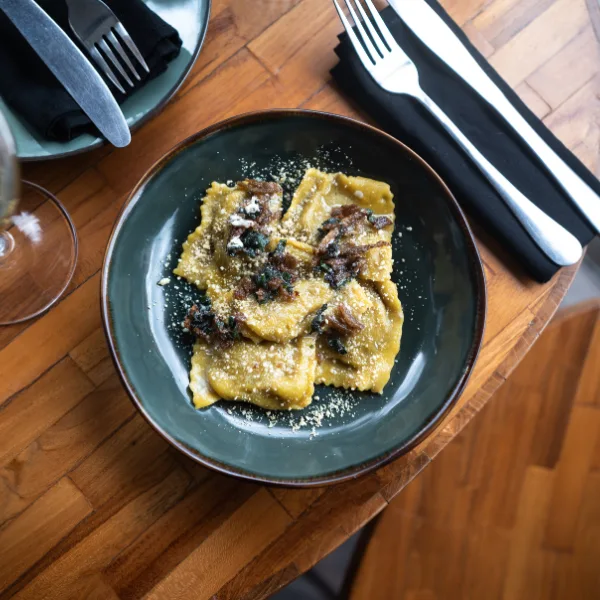
TLDR: All pasta at Kasto is made by hand each morning — no eggs, no shortcuts, and nothing from a packet. This post covers the process: the dough formula we landed on, the shapes we make, and what it actually takes to do this well without any animal products.
Every morning, before we open, someone is making pasta. It's the first thing that happens in the kitchen and the thing that sets the pace for the rest of the day. We make it by hand, in batches, and it goes into service the same day it's made.
That's not unusual for a serious Italian restaurant. What is unusual is doing it without eggs.
The egg problem
Traditional Italian pasta dough uses eggs. They add richness, colour, and structure. They make the dough elastic and easy to work with, and they give the finished pasta a firmness that holds up well to sauces. Removing them isn't a trivial substitution.
When we first started developing the Kasto menu, we tried a number of approaches. Aquafaba (the liquid from chickpeas) was an early candidate. Various combinations of olive oil, water, and semolina were another direction. None of them got quite where we needed to be — the texture was either too firm or too soft, and the dough was difficult to roll thin without tearing.
What we eventually settled on is a blend of 00 flour and semolina with a specific ratio of water, olive oil, and a small amount of turmeric for colour. The turmeric gives the pasta the yellow tint you'd expect from an egg-based dough without affecting the flavour. The semolina adds structure. The olive oil replaces some of the fat that eggs would contribute.
The proportions took several months of testing to get right, and we've adjusted them a few times since. Getting consistent results day to day, in Bali's humidity, requires attention to the dough's feel as much as the formula.
The process
The dough is mixed and rested each morning. Resting is essential — it relaxes the gluten and makes the dough significantly easier to roll without springing back. We rest for at least 30 minutes, sometimes longer depending on the shape we're making that day.
From there, it gets divided into portions and put through the pasta machine in stages, working down from the thickest setting to whatever thickness the shape requires. For pappardelle, we go fairly thick. For something like plin ravioli, we want it thin enough to see through slightly — the filling should show through the pasta when it's held up to the light.
Filled pasta like plin gets made to order in smaller batches throughout the day so the filling doesn't compromise the dough. Simple shapes like pappardelle or rigatoni can be made in a larger batch in the morning and held under a damp cloth.
We make somewhere between 8 and 15 kilograms of pasta dough on a typical service day, more on busy weekends.
Why bother?
Dried pasta is consistent and convenient. A good-quality dried pasta from a reputable Italian producer is a perfectly legitimate thing to cook with.
But handmade fresh pasta has a different quality — a softness and tenderness in the finished dish that dried pasta doesn't have. It absorbs sauce differently. It has a texture that people notice, often without knowing exactly what they're noticing. When someone describes a pasta dish as particularly good, fresh pasta is usually part of why.
For us, it's also part of the identity. Kasto's premise is that vegan Italian food can be done at the same level as conventional Italian food. Serving handmade pasta is part of making that argument.
The shapes we make
The menu changes, but a few shapes appear regularly. Plin is our signature — it's a Piedmontese form, labour-intensive to make, and worth it for the way it holds a rich filling. Pappardelle is a wider, flatter shape that works well with slow-braised sauces. Gnocchi appears occasionally, made from potato rather than ricotta, which makes it naturally vegan.
We don't make every classic Italian pasta shape — the menu is focused enough that a few shapes done well is the right call.
Frequently asked questions
Is all pasta at Kasto handmade? Yes. We make all pasta fresh each morning. None of it comes from a packet or is made off-site.
Does the pasta contain eggs? No. Our pasta dough is made without eggs or dairy. We've developed a recipe that achieves the right texture and colour using a blend of 00 flour, semolina, water, olive oil, and a small amount of turmeric.
What pasta dishes does Kasto serve? The menu changes seasonally, but regular dishes include the Brasato Plin Ravioli and seasonal pappardelle. Check the current menu on the website or ask us when you visit.
Is Kasto's pasta suitable for vegetarians? All pasta at Kasto is 100% vegan, which means it's also fully vegetarian-friendly. The dough contains no animal products.
Can I watch the pasta being made? The kitchen is partially open — depending on where you're seated and the timing of your visit, you may be able to see pasta being made during prep. We're happy to talk about the process if you're curious.
Kasto is at Jl. Canggu Padang Linjong, Canggu. Open Tuesday to Sunday. Book a table.